Cashmere vs Merino Wool for Sweaters: A B2B Buyer's Durability and Cost Guide
Choosing between cashmere and merino wool affects sweater cost, durability, and brand positioning. This guide compares fiber properties, pilling resistance, and sourcing considerations to help fashion buyers make informed decisions for their next collection.
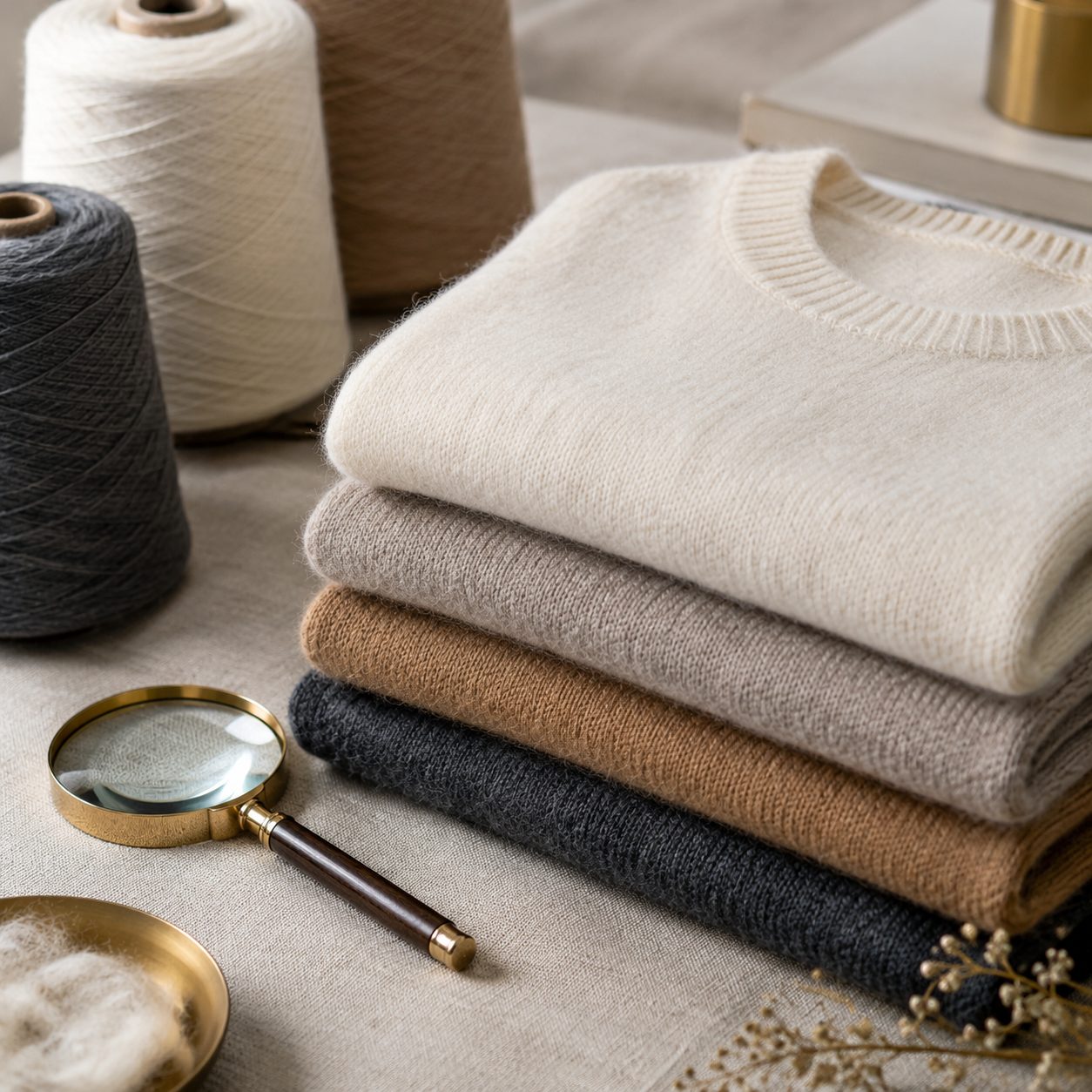
Cashmere vs Merino Wool for Sweaters: Key Differences for B2B Buyers
When sourcing sweaters, the choice between cashmere vs merino wool for sweaters is one of the most consequential decisions a buyer can make. Both fibers offer luxury and warmth, but they differ significantly in cost, durability, and care requirements. Understanding these differences is essential for aligning material selection with your brand's price point and target market.
Fiber Properties and Performance
Cashmere, harvested from cashmere goats, is renowned for its exceptional softness, lightweight warmth, and drape. Its fine fibers (typically 14-19 microns) create a plush hand feel that commands a premium. However, cashmere is less durable than merino and prone to pilling with frequent wear. Merino wool, from Merino sheep, has fibers around 17-24 microns. It is more resilient, naturally odor-resistant, and offers better shape retention. For buyers seeking durability without sacrificing comfort, merino is often the practical choice.
Cost and Sourcing Considerations
Cashmere costs significantly more per kilogram than merino, often 3-5 times higher depending on grade and origin. This directly impacts sweater FOB pricing. When evaluating cashmere vs merino wool cost comparison, consider that cashmere sweaters typically retail at a luxury price point, while merino can bridge mid-tier to premium. At YL Knit, we help buyers navigate these trade-offs by offering both fibers and blends. Our MOQ from 100 pcs allows brands to test market response before committing to large volumes.
Durability and Pilling
Pilling is a common concern with both fibers, but cashmere pills more readily due to its shorter fibers. Merino's longer fibers and natural crimp reduce pilling and help garments retain shape after washing. For high-wear items like everyday sweaters, merino often delivers better long-term value. Buyers should request pilling tests (e.g., Martindale or ICI) during sampling to set realistic expectations.
Certifications and Sustainability
Sustainability is increasingly important to consumers. YL Knit holds OEKO-TEX, BSCI, and GRS certifications, ensuring responsible production and traceability. GRS-certified recycled cashmere and merino options are available for brands targeting eco-conscious markets. These certifications also simplify compliance with EU and US regulations.
Care and Maintenance
Both cashmere and merino require gentle care. Hand washing or machine washing on a wool cycle with cold water and wool-specific detergent is recommended. Lay flat to dry to preserve shape. Proper care extends garment life and maintains customer satisfaction. Including clear care labels is essential; YL Knit provides guidance on labeling to reduce returns.
Making the Choice
For buyers, the decision hinges on brand positioning, target retail price, and desired durability. Cashmere suits luxury collections where softness and prestige are paramount. Merino works for everyday luxury, activewear, and value-driven lines. Blends can offer a middle ground, balancing cost and performance. YL Knit's team can advise on the best fiber or blend for your specific requirements, leveraging our 8 factories and 600 staff to deliver quality at scale.
To discuss your next sweater project and receive fiber samples, contact YL Knit today.
Frequently Asked Questions
What is the main difference between cashmere and merino?
Cashmere is softer, lighter, and more expensive, while merino is more durable, resistant to pilling, and cost-effective. The choice depends on your brand's price point and target market.
Which fiber is more durable for sweaters?
Merino wool is generally more durable due to its longer fibers and natural crimp, which resist pilling and help maintain shape after repeated wear and washing.
Is cashmere worth the higher cost?
Cashmere offers unmatched softness and luxury appeal, making it ideal for premium collections. However, for everyday wear, merino often provides better long-term value.
How can I test pilling in sweater samples?
Request standard pilling tests such as Martindale or ICI during sampling. These tests simulate abrasion and help predict how the fabric will perform in real wear.
Does YL Knit offer certified cashmere and merino?
Yes, YL Knit holds OEKO-TEX, BSCI, and GRS certifications. We offer GRS-certified recycled cashmere and merino options for sustainable sweater production.