How to Source Small Batch Sweaters: 2026 Guide for Fashion Brands
Small batch sweater production is now a core sourcing strategy for fashion brands that want faster speed to market and controlled inventory risk. This guide explains MOQ options, sampling steps, and quality control for small runs, with practical advice for buyers working with overseas knitwear factories.
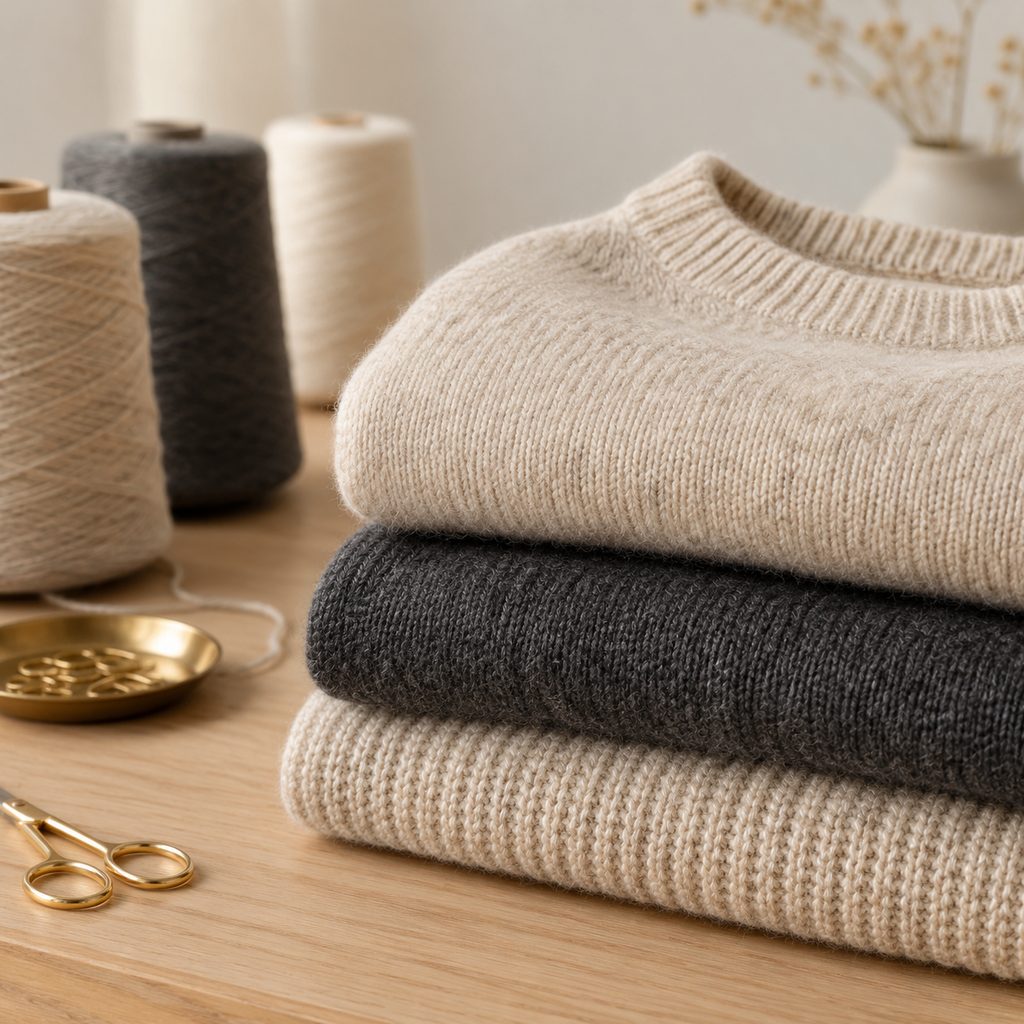
Why Small Batch Sweater Production Is Winning in 2026
In 2026, fashion brands are shifting away from massive seasonal buys toward smaller, more frequent drops. This change has made small batch sweater production a critical capability for knitwear factories. Instead of committing to thousands of units per style, brands now test 100–300 pieces, read the market, and reorder winners quickly. For sourcing managers, this means finding a partner that can handle low minimums without sacrificing quality or lead times.
At YL knit, we see this shift firsthand. Our Dongguan facilities have adapted to support MOQs from 100 pieces per style, enabling brands to validate designs before scaling. The payoff is clear: less dead stock, faster cash flow, and the agility to respond to trends as they happen.
What ‘Small Batch’ Really Means for Knitwear
Small batch sweater production is not just about quantity. It involves a different operational mindset: flexible knitting schedules, quick yarn changeovers, and efficient sampling. Factories that excel at small runs often use modular production lines and digital tools to minimize waste. For buyers, the key is to understand how a factory defines ‘small’—some may offer 300 pieces as a minimum, while others, like YL knit, go as low as 100 pieces for select yarns and gauges.
- MOQ flexibility: Look for factories that offer 100–500 piece minimums rather than 1,000+.
- Yarn availability: Stock-service yarns (wool, cotton, blends) support lower MOQs; specialty yarns may require higher volumes.
- Gauge and style: Fine-gauge sweaters (12GG, 14GG) often have lower minimums than chunky hand-knit looks.
- Sampling speed: A factory that turns samples in 7–10 days supports faster decision-making.
Sampling: The First Step to a Successful Small Run
Before committing to bulk, brands need accurate samples. A streamlined sampling process is essential for small batch sweater production because it reduces the risk of costly revisions. At YL knit, we provide digital patterns and 3D simulations to speed up approvals. Physical samples are then knitted on the same machines that will run bulk, ensuring consistency. We recommend buyers request at least two sample iterations: one for fit and one for final color and trim approval.
For low MOQ programs, sampling costs can be a hurdle. Some factories charge for samples but credit the cost against bulk orders. Clarify this upfront. Also, ask about sample lead times—fast turnarounds (under two weeks) are a strong indicator of a factory’s agility.
Quality Control for Small Batches: No Compromises
Small runs can be more challenging for quality control because there is less room for error. However, a robust QC process should scale down as well as up. Look for factories with in-line inspection at multiple stages: yarn inspection, knitting, linking, and final finishing. At YL knit, our 7-stage QC process is applied to every order, regardless of size. This includes AQL 2.5 final inspection and color consistency checks using spectrophotometers to ensure lab dip and bulk match.
For buyers, it’s wise to request a pre-production sample (PPS) and sign off before bulk begins. During production, ask for weekly progress reports and in-line inspection photos. This level of transparency is standard for reputable factories and helps catch issues early.
Sustainability and Certifications for Small Batch Production
Small batch production aligns well with sustainability goals: less overproduction means less waste. But buyers should also verify that factories hold relevant certifications. YL knit is OEKO-TEX Standard 100, BSCI, and GRS certified, covering chemical safety, social compliance, and recycled content. For brands marketing eco-friendly collections, these certifications provide credible backing.
When sourcing small batches, ask about yarn traceability and whether recycled or organic options are available at low MOQs. Some factories may have minimums for GRS-certified yarns due to supply chain constraints, so plan early.
Practical Tips for Sourcing Managers
- Start with a pilot order: Test 100–200 pieces to evaluate quality and communication.
- Consolidate styles: Using the same yarn across multiple styles can reduce MOQ requirements.
- Plan for repeats: If a style sells well, be ready to reorder quickly—factories can often hold yarn for 3–6 months.
- Visit or audit: A factory tour (virtual or in-person) confirms capabilities and builds trust.
Small batch sweater production is no longer a niche; it’s a competitive advantage. By choosing a factory that embraces flexibility, quality, and transparency, brands can move faster and smarter in 2026 and beyond.
Frequently Asked Questions
What is the minimum order for small batch sweaters?
At YL knit, small batch sweater production starts at 100 pieces per style, depending on yarn and gauge. This allows brands to test designs without large inventory commitments.
How long does sampling take for small batch production?
Sampling typically takes 7–10 days at YL knit. We recommend two iterations: one for fit and one for final color and trim approval, to ensure bulk accuracy.
What quality control steps apply to small batch orders?
Every order, regardless of size, undergoes YL knit's 7-stage QC process, including in-line inspection and AQL 2.5 final inspection. Color consistency is verified with spectrophotometers.
Are sustainable yarns available for low MOQ orders?
Yes, YL knit offers GRS-certified recycled yarns and organic cotton, though minimums may be higher due to supply chain constraints. OEKO-TEX and BSCI certifications ensure safety and ethics.
Can I reorder small batch styles quickly?
Yes, YL knit can hold yarn for 3–6 months after a pilot order, enabling fast repeats. This helps brands capitalize on winning styles without long lead times.