Knitwear Color Consistency: YL Knit's Lab Dip to Bulk Dye Lot Matching
Color mismatches between lab dip and bulk dye lots can delay shipments and damage brand trust. YL Knit shares its three-step color consistency process, from spectrophotometer evaluation to bulk production controls, helping buyers achieve reliable color matching in sweater manufacturing.
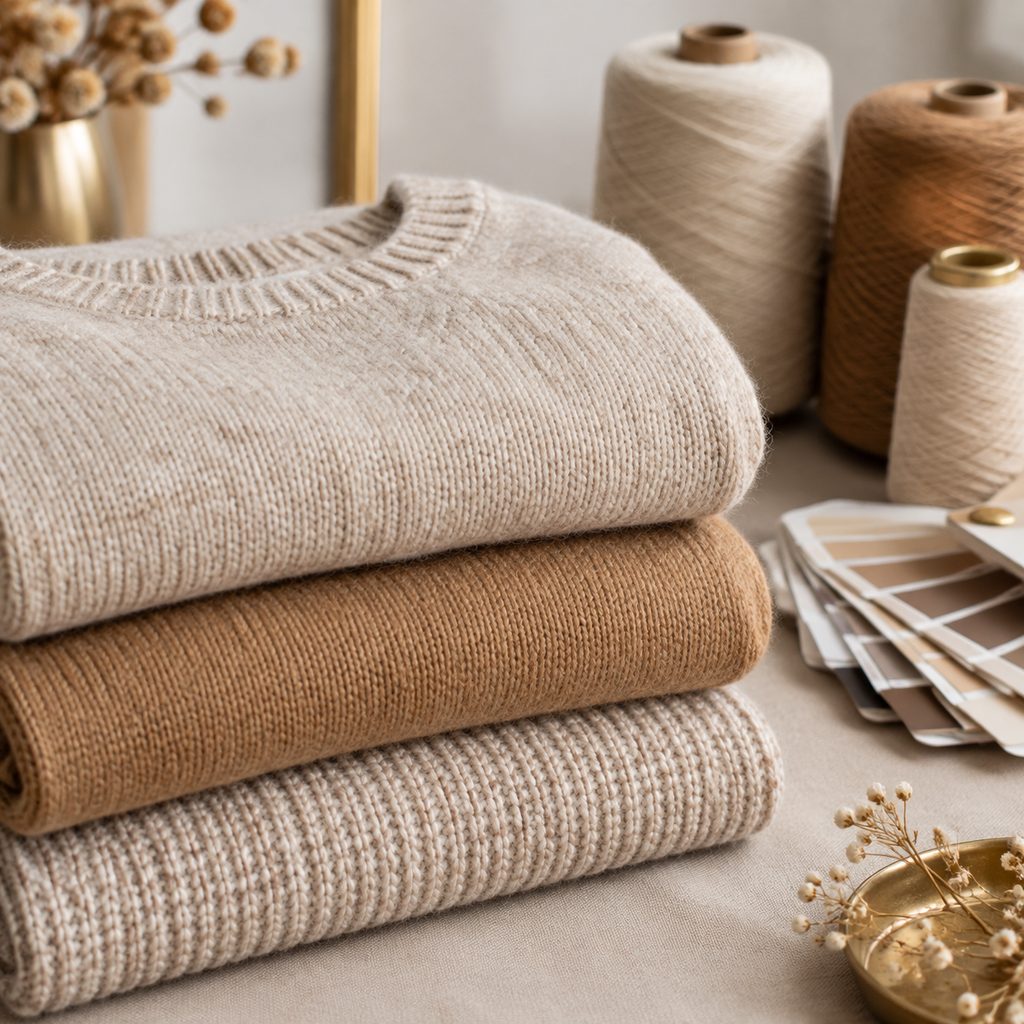
Why Color Consistency Matters in Knitwear Sourcing
For fashion brands, color consistency is non-negotiable. A sweater that arrives in a shade different from the approved sample can trigger returns, markdowns, and lost customer trust. At YL Knit, we treat color matching as a science, not an art. Our three-step process—lab dip approval, bulk dye lot control, and final inspection—ensures that every order meets the buyer's exact color standards.
Step 1: Lab Dip Approval
The journey begins with a lab dip. Our dye house prepares small yarn samples using the buyer's specified color reference—whether a Pantone number, physical swatch, or previous production sample. Each lab dip is measured with a spectrophotometer to calculate Delta E (color difference) values. A Delta E below 1.0 is generally imperceptible to the human eye; we aim for below 0.8 for critical colors. Buyers receive lab dips within 5–7 days, along with spectral data for objective evaluation.
We recommend buyers approve lab dips under multiple light sources—daylight, store lighting, and incandescent—because color can shift dramatically depending on illumination. This simple step prevents costly surprises later.
Step 2: Bulk Dye Lot Control
Once the lab dip is approved, production moves to bulk dyeing. Here, consistency hinges on strict process control. At YL Knit, we use computer-controlled dye machines that replicate the lab recipe with high precision. Key parameters—temperature, pH, dye concentration, and cycle time—are monitored in real time. Yarn batches are dyed in lots of up to 500 kg; each lot is tested against the approved standard using a spectrophotometer. If Delta E exceeds 1.5, the lot is rejected and re-dyed.
For orders requiring multiple dye lots, we blend yarns from different lots during knitting to ensure uniform color across the entire shipment. This is especially important for large orders where a single dye lot cannot cover the full quantity.
Step 3: Final Inspection and Color Verification
After knitting and finishing, every sweater undergoes a final color check. Our quality team compares each garment to the approved lab dip under standard lighting (D65). Any piece with visible color deviation is pulled out. We also conduct random sampling using a spectrophotometer to verify batch consistency. This dual approach—visual and instrumental—catches even subtle variations.
For buyers, we provide a color consistency report with each shipment, including Delta E values for the bulk lot. This documentation supports your own quality assurance and helps resolve any disputes quickly.
Common Challenges and How YL Knit Solves Them
Color matching in knitwear faces unique hurdles:
- Yarn variability: Natural fibers like wool and cotton absorb dye differently. We test each yarn lot before dyeing to adjust recipes.
- Finishing effects: Washing, steaming, and pressing can alter color. We simulate finishing on lab dips to predict the final shade.
- Multiple suppliers: If you source yarn from different mills, color can vary. We centralize dyeing in-house to control the process end-to-end.
Working with YL Knit for Reliable Color
With 8 factories and a dedicated dye house in Dongguan, YL Knit offers full control over color from yarn to finished sweater. Our OEKO-TEX and GRS certifications ensure that dyes meet environmental and safety standards. For buyers, this means fewer approvals, faster lead times, and consistent color across reorders.
Ready to discuss your next collection? Our team provides lab dips within a week and supports small batch orders from 100 pcs. Let's make color consistency your competitive advantage.
Frequently Asked Questions
How does YL Knit ensure color consistency?
Through a three-step process: lab dip approval, bulk dye lot control, and final inspection. Each step uses spectrophotometer measurements to keep Delta E values within strict tolerances.
What is Delta E in knitwear dyeing?
Delta E measures color difference. Below 1.0 is generally imperceptible. YL Knit targets below 0.8 for lab dips and rejects bulk lots exceeding 1.5.
How long does lab dip approval take?
YL Knit delivers lab dips within 5–7 days, including spectral data. Buyers should evaluate them under multiple light sources to avoid surprises.
Can YL Knit handle multiple dye lots?
Yes. For large orders, we blend yarns from different lots during knitting to ensure uniform color across the entire shipment.
What certifications support YL Knit's dyeing?
YL Knit holds OEKO-TEX and GRS certifications, ensuring dyes meet environmental and safety standards for sustainable knitwear production.