Knitwear Quality Inspection: How AQL Works for Sweater Buyers
AQL is the industry-standard method for sweater quality inspection. Learn how it works, what major, minor and critical defects mean, and how to set inspection levels for knitwear orders.
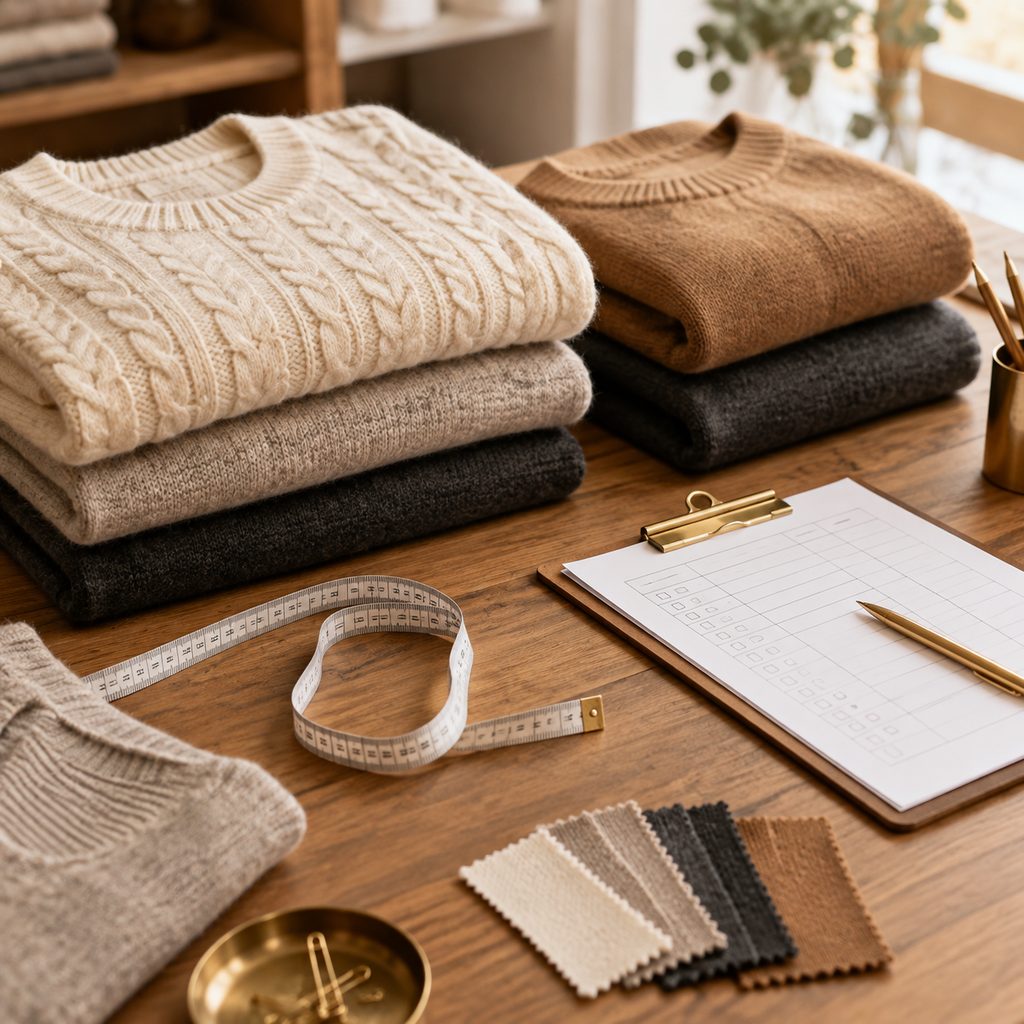
What AQL Means for Knitwear Buyers
For fashion brand buyers, understanding AQL knitwear quality inspection is essential to avoid costly surprises at delivery. AQL, or Acceptable Quality Limit, is a statistical sampling method defined by ISO 2859-1. Instead of checking every sweater, an inspector randomly selects a sample from the production lot and compares the number of defects found against a pre-agreed limit. If the sample passes, the lot is accepted; if it fails, the lot is rejected or reworked.
How the AQL Sampling Process Works
An AQL inspection for sweater quality control follows a clear sequence:
- Confirm lot size and inspection level (usually General Inspection Level II).
- Determine sample size using AQL tables (e.g., 200 units → 32 pieces for Level II).
- Set acceptable defect limits: typically 2.5 for major defects and 4.0 for minor defects.
- Inspect each sampled piece for workmanship, measurements, color, and function.
- Record defects and compare against Accept (Ac) and Reject (Re) numbers.
- Issue an inspection report with pass or fail result.
Major vs. Minor Defects in Sweaters
Not all defects are equal. In knitwear, a major defect affects function, appearance, or saleability—such as a hole, broken yarn, wrong size, or noticeable color shading. A minor defect is less likely to be noticed by the consumer, such as a slight uneven stitch or loose thread. Critical defects, which pose safety risks like sharp needles, must be zero. Buyers should agree on defect definitions during the purchase order stage.
Why AQL Matters for Small Batch Sweater Orders
Small batch sweater production often faces unique inspection challenges. With lower volumes, sampling can be less representative, so some factories combine AQL with 100% inspection for critical operations. At YL Knit, our 7-stage quality control process includes in-line checks after knitting, linking, and finishing, plus a final AQL inspection before packing. This layered approach catches issues early and keeps defect rates low.
Common Pitfalls in AQL Inspection
Buyers new to AQL may make these mistakes:
- Using the wrong inspection level for the product risk.
- Not specifying defect classifications in the contract.
- Accepting an inspection without measurement verification.
- Ignoring packaging and labeling checks within the AQL scope.
To avoid these, include detailed quality requirements in your tech pack and confirm the inspection plan with your factory before production.
How YL Knit Supports Buyer Inspections
YL Knit welcomes third-party inspections and provides full access to production records. Our in-house QC team is trained on AQL standards and works with buyers to define defect criteria. With OEKO-TEX, BSCI, and GRS certifications, we ensure that quality and compliance go hand in hand. For buyers sourcing sweaters from China, a clear AQL framework protects both sides and builds long-term trust.
Frequently Asked Questions
What is AQL in knitwear inspection?
AQL stands for Acceptable Quality Limit, a statistical sampling method defined by ISO 2859-1. It determines the maximum number of defects allowed in a sample for the lot to be accepted.
What are major and minor defects in sweaters?
Major defects affect function or saleability, like holes or wrong size. Minor defects are less noticeable, such as loose threads. Critical defects like sharp needles must be zero.
How does AQL sampling work for small batch orders?
Small batches may use combined AQL and 100% inspection for critical operations. The sample size is based on lot size and inspection level, typically General Level II.
What are common AQL inspection mistakes?
Common mistakes include wrong inspection level, undefined defect classifications, skipping measurements, and ignoring packaging checks. Clear requirements in the tech pack help avoid these issues.
Does YL Knit allow third-party inspections?
Yes, YL Knit welcomes third-party inspections and provides full access to production records. Our in-house QC team is trained on AQL standards and works with buyers to define defect criteria.