Sweater Knitting Techniques: Buyer's Guide to Cable, Jacquard & Intarsia
Cable, jacquard, and intarsia each demand different machinery, lead times, and quality checks. YL Knit explains how to specify these decorative knitting techniques for on-time delivery and consistent quality.
Why Your Knitwear Specification Needs Techniques Clarity
When you brief a sweater knitting techniques supplier, specifying "cable detail" or "jacquard pattern" is not enough. Each technique — cable, jacquard, intarsia, and pointelle — consumes different machine time, yarn, and operator skill. Misunderstanding these differences leads to sampling delays and bulk quality surprises. At YL Knit, we have produced over 2.5 million sweaters across eight Dongguan factories since 2007, and we see the same specification gaps repeatedly.
1. Cable Knitting: Structure and Stitch Definition
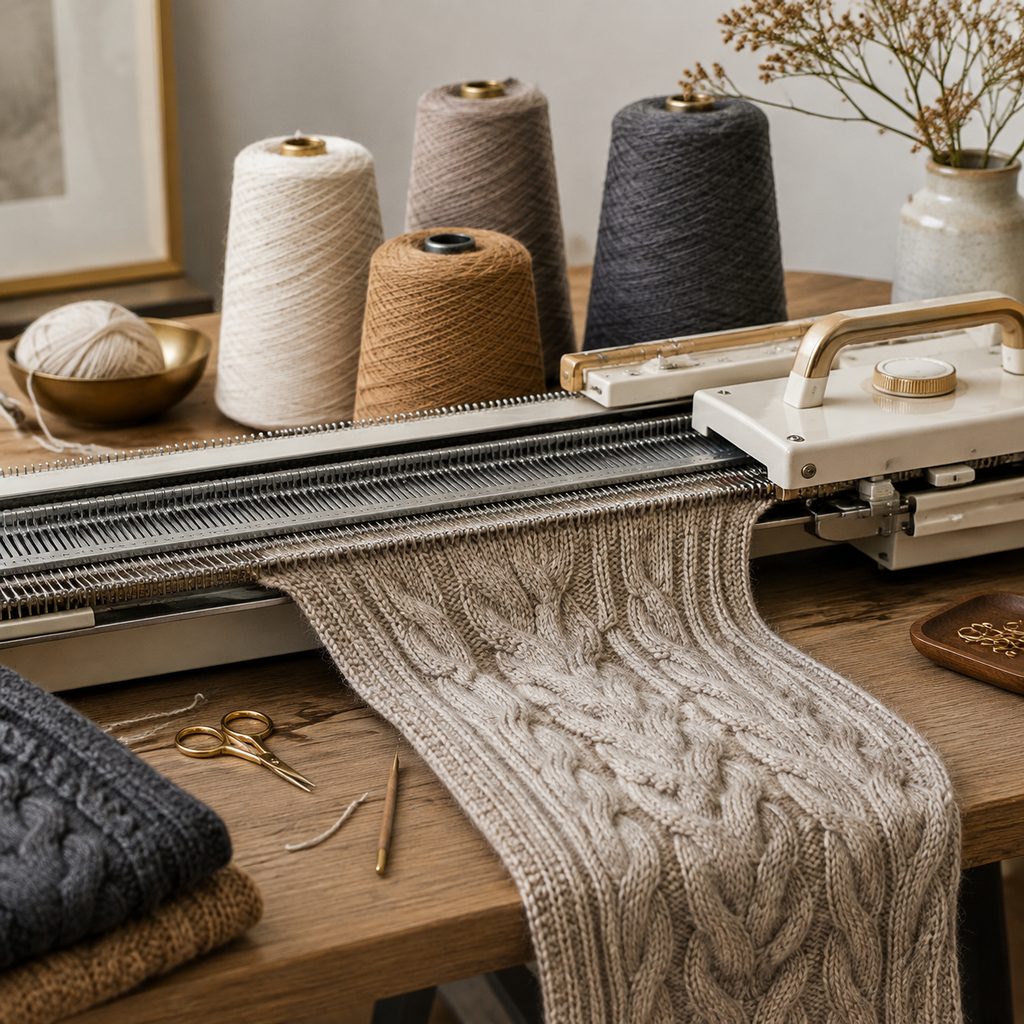
Cable knitting uses a continuous yarn and a single bed of needles to create raised, twisted columns. It is worked on flat knitting machines with a gauge typically between 3GG and 12GG, depending on the desired cable width. Buyers should note that:
- Cable patterns add weight per square meter, increasing yarn consumption by 10–20% versus plain knit.
- Thicker yarns (lambswool, cotton) show cables most clearly; fine gauge cashmere may lose definition.
- Quality checks must include cable symmetry and edge distortion after wash testing.
Because cable knitting is continuous, it can often be produced on standard flat machines without major retooling, making it a cost-effective choice for statement textures.
2. Jacquard Knitting: Multi-Color Complexity
Jacquard allows two or more yarn colors to be knitted simultaneously, creating patterns with floats on the reverse. This technique requires either electronic flat machines or circular machines with jacquard capability. The key buyer considerations are:
- Yarn float length matters: where shorter float jacquard sweaters are more durable, long floats snag easily and may require a backing.
- Machine programming time adds 3–7 days to sampling versus solid knits.
- Color bleeding and shrinkage differ per yarn; pre-production lab dips are essential.
At YL Knit, our electronic flat machines handle up to 6-color jacquard, but we advise buyers to keep patterns to 3–4 colors for stable bulk production.
3. Intarsia: Separate Yarn Blocks, Hand-Finish Precision
Intarsia places distinct blocks of color without floats, often used for large motifs, cartoon graphics, or geometric panels. Each color block is knitted with its own yarn cone. This method is labor-intensive and typically requires hand-linking or hand-finishing to secure yarn ends. Buyers should expect:
- Higher labor cost — intarsia sweaters can take 30–50% more operator time than jacquard.
- Limited machine gauge: finer gauges (12GG+) may be too tight for clean intarsia joins.
- Strict quality control on joins and loose ends to avoid unraveling after wear.
For brands planning small batch sweater production, intarsia offers strong visual impact but requires close coordination with our sampling team early in the design phase.
4. Pointelle and Other Open-Work Effects
Pointelle creates small eyelet patterns by transferring stitches. It is popular in lightweight cotton and blends for spring/summer capsules. Similar to cable, pointelle knits are produced on standard flat machines but demand precise tension control. Common pitfalls include:
- Holes that become too large after washing, affecting fit and modesty.
- Delicate yarns (e.g., cashmere blends) may break during stitch transfer.
We recommend a pre-production wash test for every pointelle style to verify hole size stability.
How YL Knit Supports Technically Complex Sweaters
With 8 factories and 600 staff, YL Knit operates both 3GG–14GG flat machines and circular knitting lines. Our in-house sampling team provides technical feedback during design — for example, suggesting a jacquard alternative when intarsia costs exceed budget, or adjusting cable width to suit a finer yarn. We are OEKO-TEX, BSCI, and GRS certified, and accept orders from 100 pcs per style, enabling brands to test multiple techniques before scaling.
If you are planning a decorative knitwear collection, share your tech pack with our team. We will return a sample timeline and cost breakdown within 48 hours.
Frequently Asked Questions
What is the difference between jacquard and intarsia knitting?
Jacquard knits multiple colors with floats on the back, while intarsia uses separate yarn blocks without floats. Intarsia is more labor-intensive and costly, but avoids snagging.
Which knitting technique adds the most yarn cost?
Cable knitting typically increases yarn consumption by 10–20% due to raised stitch structure. Intarsia also raises labor cost but not necessarily yarn weight.
Can small batch sweater production handle jacquard patterns?
Yes. YL Knit accepts orders from 100 pcs per style and uses electronic flat machines for jacquard, though programming adds 3–7 days to sampling.
How many jacquard colors are recommended for stable bulk?
We advise 3–4 colors for consistent bulk production. Our machines handle up to 6 colors, but more colors increase risk of float and tension issues.
What quality checks apply to pointelle sweaters?
Pointelle requires a pre-production wash test to ensure eyelet holes do not enlarge or distort after laundering. Tension control during knitting is also critical.