Knitwear Design Brief to Bulk: How to Write a Spec That Ships on Time
A precise knitwear design brief is the single biggest lever buyers control over sampling speed, bulk cost and on-time delivery. This guide breaks down the eight spec elements YL Knit requires before a sample can be quoted, and shows how vague briefs quietly add weeks and dollars to every order.
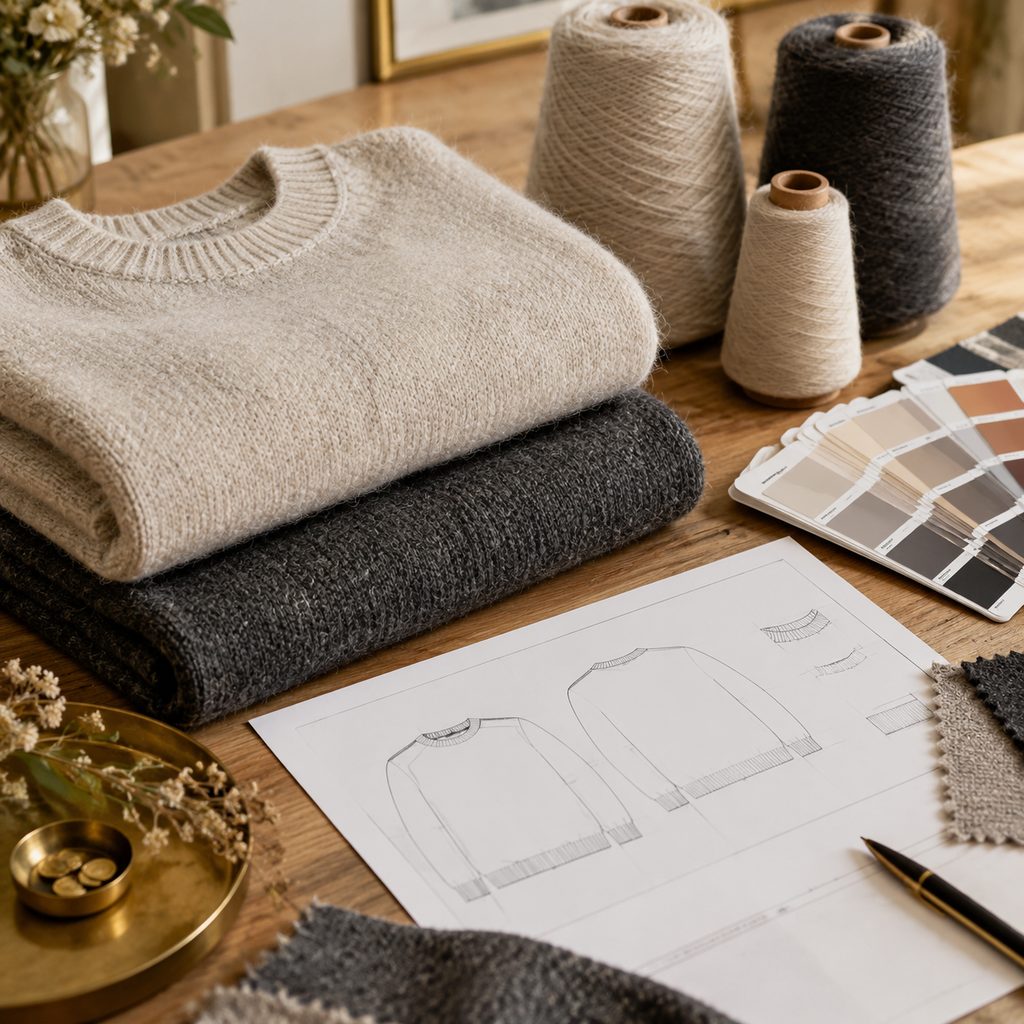
A knitwear design brief is the first document a knitwear factory uses to price, plan and sample your order — and a weak brief is the most common reason sweater programs slip. At YL Knit, a complete knitwear design brief is what separates a sample approved in ten days from one that bounces through three revision rounds. After 18 years of OEM/ODM production across eight factories in Dongguan, our sampling team can trace almost every delay back to a missing or ambiguous line in the original brief.
Why the Brief Decides Everything Downstream
Knitting is not cut-and-sew. Gauge, yarn count, stitch structure and finishing all interact, so a single unclear instruction — say, "medium weight" instead of "7GG, 2/28 merino" — forces the factory to guess. Guesses cost money: a wrong gauge means re-programming machines; a wrong yarn means re-sourcing and re-testing; a missing care instruction means a re-print of labels. Buyers who treat the brief as a procurement document, not a mood board caption, consistently get faster quotes and fewer surprises.
The Eight Elements of a Complete Knitwear Spec
- Style reference and silhouette: technical flat or CAD with measurements, plus a photo of the target look. Note drop shoulder vs. set-in, body length and any panel shaping.
- Fiber and yarn specification: fiber content by percentage, yarn count (e.g. 2/28), and any blend or origin requirements. If you are open to substitution, say so and set the acceptance criteria.
- Gauge and stitch structure: 3GG, 5GG, 7GG, 12GG or 14GG, plus stitch type — plain, rib, cable, jacquard, intarsia, links-links. This drives machine allocation and cost.
- Color standards: Pantone TCX references per colorway, with lab-dip approval required before bulk. Include thread and trim colors too.
- Size grading and fit: base size, grade rules and tolerance per measurement point.
- Trims and branding: buttons, zippers, drawcords, woven labels, care labels, hangtags and packaging format.
- Compliance and testing: target markets, required certifications (OEKO-TEX, GRS, BSCI audit status) and any restricted substances list.
- Commercials and timeline: target FOB, order quantity, MOQ per colorway, sample deadline and required ship date.
Where Briefs Usually Fail
Three gaps account for most rework. First, color: sending a photo instead of a Pantone reference guarantees a mismatch. Second, gauge ambiguity: "chunky" means different things to a 3GG and a 7GG machine. Third, compliance silence: if a buyer only reveals after sampling that the yarn must be GRS-certified, the whole yarn plan restarts. YL Knit's sampling coordinators now run a 12-point brief checklist at intake and flag gaps within 24 hours, before any machine time is booked.
Small Batch Sweater Production Rewards Precision
Because YL Knit supports MOQ from 100 pcs, buyers increasingly run many small colorways and quick drops. That model only works when each brief is airtight — small runs leave no room for a re-knit. Our ODM team can also propose yarn and stitch alternatives to hit a target FOB while protecting hand feel, but only when the brief states which variables are fixed and which are flexible.
A Brief Template That Works
Keep one master document per style, version-controlled with a date. Attach the tech pack, Pantone list, trim sheet and compliance sheet as separate tabs. State explicitly what is negotiable. Then send it — and expect a quote and sampling plan back within days rather than weeks. Buyers who standardize this process across seasons report shorter development cycles and cleaner bulk execution, because the factory is building to a spec, not interpreting an idea.
Frequently Asked Questions
What is a knitwear design brief?
It is the master document a factory uses to price, plan and sample a sweater order, covering silhouette, yarn, gauge, color, grading, trims, compliance and timeline.
Which spec elements does YL Knit require before sampling?
Eight: style reference, fiber and yarn spec, gauge and stitch, color standards, size grading, trims, compliance testing and commercial timeline with target FOB.
Why does an unclear brief slow down sweater production?
Vague terms like medium weight force the factory to guess gauge or yarn, causing machine re-programming, yarn re-sourcing and extra sample rounds.
How should buyers specify color in a brief?
Use Pantone TCX references per colorway rather than photos, and require lab-dip approval before bulk. Include thread and trim colors too.
Does a precise brief matter for small batch orders?
Yes. With MOQ from 100 pcs, small runs leave no room for re-knitting, so each brief must be airtight to avoid costly rework.