Knitwear Lab Testing Beyond Certificates: What Buyers Must Know
Certificates alone don't guarantee sweater quality. Learn which lab tests—shrinkage, pilling, colorfastness, and more—actually predict performance, and how to use test data to avoid costly bulk failures.
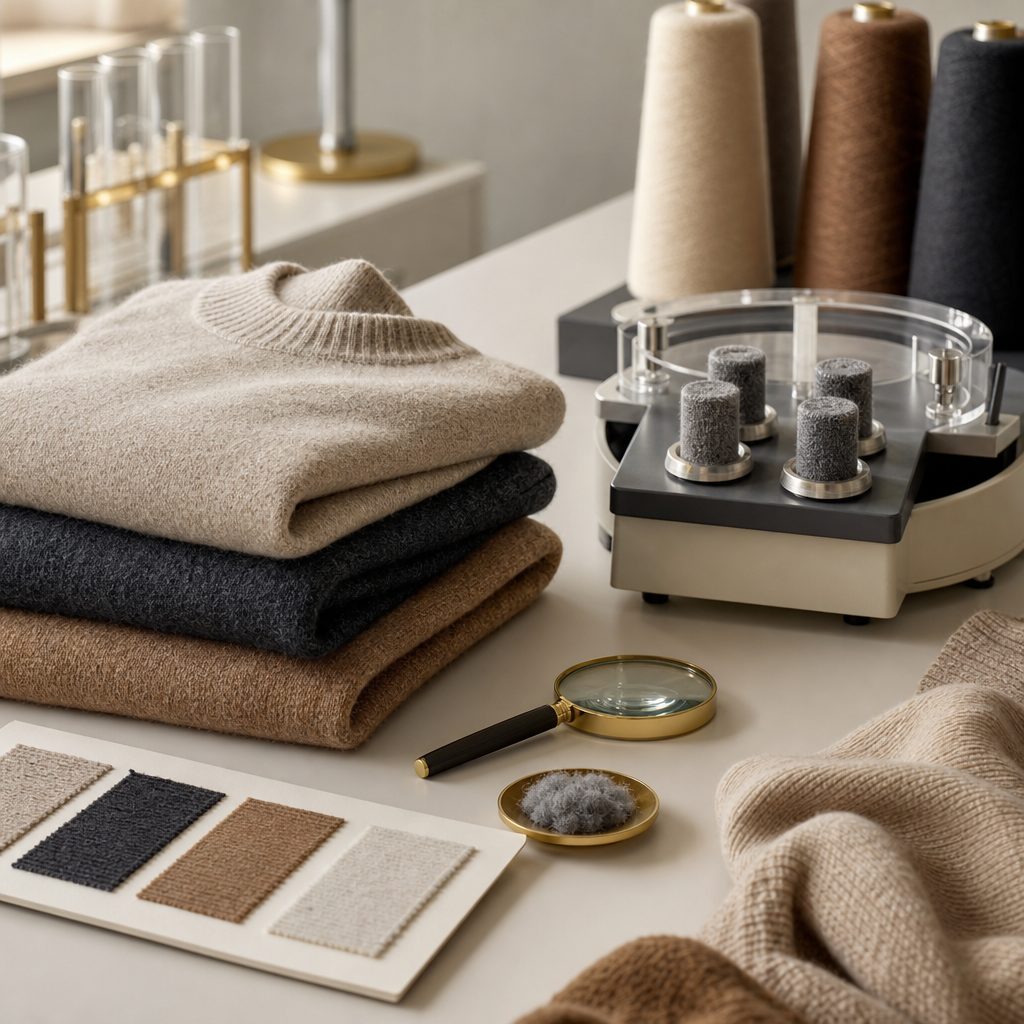
Why Lab Testing Matters More Than Certificates
When sourcing knitwear, certificates like OEKO-TEX or GRS are essential, but they only confirm basic safety and fiber content. They don't tell you how a sweater will behave after 20 washes or whether it will pill after a week of wear. For fashion brand buyers and sourcing managers, understanding the full scope of knitwear lab testing is critical to avoiding returns and protecting your brand reputation. At YL Knit, we've seen too many buyers rely solely on certificates and skip performance tests—only to face costly issues in bulk.
Key Tests Every Buyer Should Request
Beyond certificates, a comprehensive testing protocol should include:
- Dimensional stability (shrinkage): Measures how much a sweater shrinks or grows after washing. Aim for less than 3% for most knits.
- Pilling resistance: Using the Martindale or ICI pilling box, this test predicts surface fuzzing. Grade 3-4 or higher is acceptable for most markets.
- Colorfastness: Includes fastness to washing, rubbing, light, and perspiration. Poor colorfastness leads to bleeding and fading complaints.
- Fiber content verification: Ensures the yarn blend matches the spec—critical for cashmere and wool claims.
- Spirality and skewing: Checks twisting after washing, which affects fit and comfort.
These tests are not one-size-fits-all. For example, a heavyweight cable knit may need different shrinkage tolerances than a fine-gauge merino sweater. Your factory should tailor the test plan to the garment's end use.
How to Read Test Reports Without a Lab Background
Test reports are full of numbers, but buyers should focus on the pass/fail thresholds agreed in the spec. At YL Knit, we provide a plain-language summary alongside the raw data, highlighting any results that fall outside the agreed range. For instance, a pilling grade of 3 might be acceptable for a casual sweater but not for a premium cashmere blend. Always compare results against your brand's quality standards—not just the factory's default. And remember: tests are performed on samples, so consistency in bulk depends on the factory's process control.
Common Pitfalls in Knitwear Testing
Even when tests are done, buyers often misinterpret them. A common mistake is testing only the yarn, not the finished garment—shrinkage and pilling can change after knitting and finishing. Another pitfall is ignoring test conditions: washing at 40°C versus 30°C yields different results. Insist that tests mirror the care label instructions. Finally, don't skip pre-production testing: waiting until bulk is ready is too late to correct issues.
YL Knit's Approach to Testing and Transparency
Our in-house lab in Dongguan is equipped for standard knitwear tests, and we partner with third-party labs for specialized evaluations. For every order, we define a testing plan during pre-production and share results before bulk shipment. This transparency helps buyers make informed decisions and reduces the risk of surprises. With 8 factories and over 2.5 million sweaters shipped to 40+ countries, we've refined our testing protocols to balance speed and rigor. Whether you're ordering 100 pieces or 100,000, the same standards apply.
Practical Tips for Buyers
- Request a testing plan with your tech pack and confirm which tests will be performed at which stage.
- Ask for test reports from previous production runs for similar styles.
- Visit the factory's lab or review their third-party lab partnerships during a factory audit.
- Include test tolerances in your purchase order to avoid disputes.
Lab testing is not a box-ticking exercise—it's a strategic tool for quality assurance. By going beyond certificates, you protect your margins and your brand. To learn more about how YL Knit can support your testing needs, contact our team.
Frequently Asked Questions
What tests should be done on knitwear beyond certificates?
Key tests include shrinkage, pilling resistance, colorfastness, fiber content verification, and spirality. These predict how a sweater performs after washing and wear, which certificates do not cover.
How do I interpret a knitwear test report?
Focus on pass/fail thresholds agreed in your spec rather than raw numbers. Compare results against your brand's quality standards, and ensure tests mirror care label conditions.
Why is pre-production testing important for sweaters?
Pre-production testing catches issues like shrinkage or pilling before bulk manufacturing. Waiting until bulk is ready can lead to costly rework or rejects.
What is a common mistake in knitwear testing?
Testing only the yarn instead of the finished garment is a frequent mistake. Shrinkage and pilling can change after knitting and finishing, so always test the final product.
How does YL Knit ensure testing transparency?
YL Knit defines a testing plan during pre-production, shares plain-language summaries with raw data, and provides results before bulk shipment. They also partner with third-party labs for specialized tests.