Knitwear Needle Selection: How Gauge Choices Shape Sweater Cost and Hand Feel
Needle selection and machine gauge are often overlooked by buyers, yet they directly affect sweater hand feel, weight, and cost. This guide explains how YL Knit matches gauge to yarn count and what buyers should specify in tech packs.
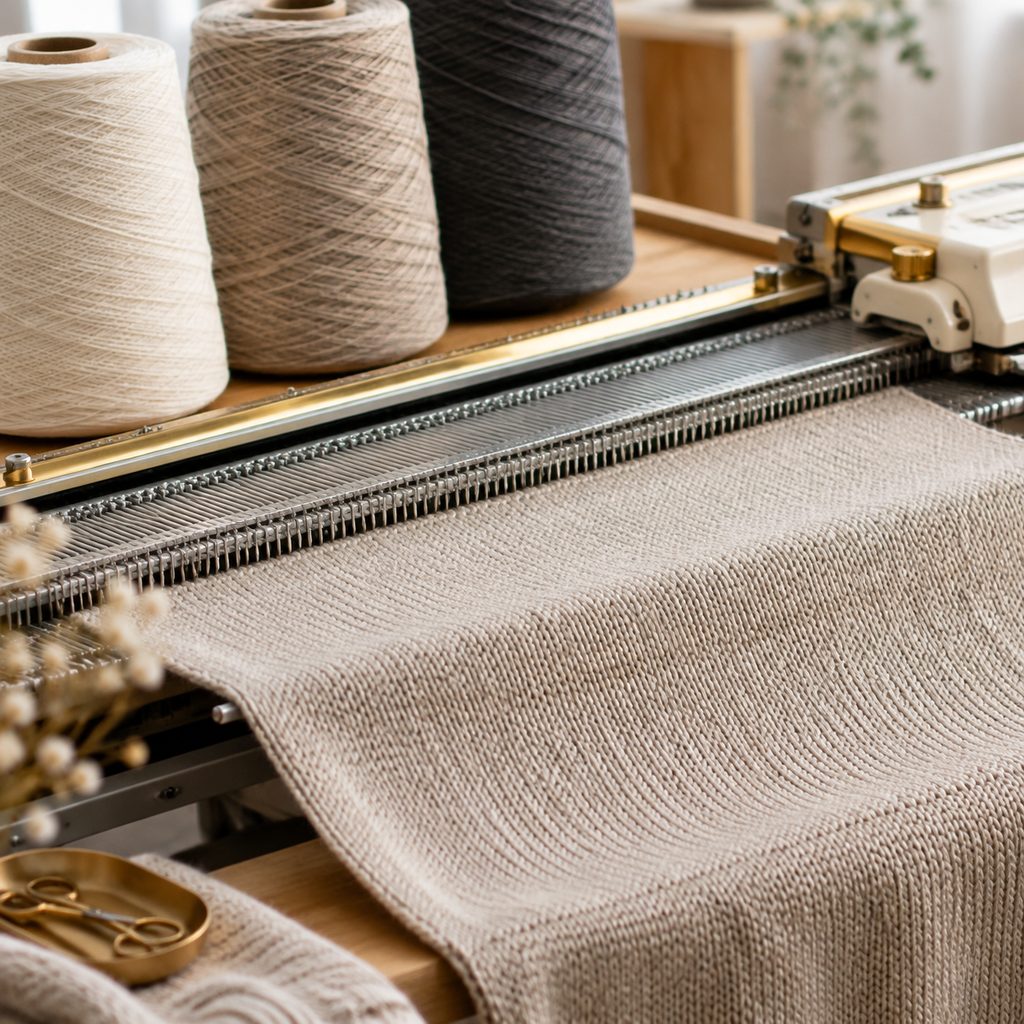
Choosing the right knitwear needle selection is one of the most consequential decisions a buyer makes before sampling, because it locks in hand feel, weight, and production cost. At YL Knit, a premium knitwear manufacturer founded in 2007 in Dongguan, China, we see buyers focus on fiber and color while leaving gauge and needle choice to the factory. That gap often leads to late-stage rework. Here is a practical framework for specifiers.
What Needle Selection Actually Means
In flat-bed knitting, needle selection refers to the combination of machine gauge (needles per inch) and needle type used to form each loop. A 3GG machine produces chunky, open stitches; a 14GG machine produces fine, dense fabric. The needle bed, cam system, and yarn feeder must all suit the chosen yarn count. When they match, the sweater holds its shape; when they do not, you get dropped stitches, skewing, or a limp hand feel.
Gauge, Yarn Count, and the Cost Equation
There is a simple rule: finer gauge requires finer yarn, and finer yarn costs more per kilogram for the same fiber. A 12GG merino sweater uses roughly half the yarn weight of a 5GG version, but the spinning and knitting time per unit can be higher. Buyers should compare cost per garment, not cost per kilo. YL Knit runs gauges from 1.5GG to 16GG across eight factories, so we can quote the same design in multiple gauge options for comparison.
Matching Gauge to End Use
- Chunky 3–5GG: statement outerwear, cable and rib styles, lower yarn cost per unit but higher weight.
- Mid 7–9GG: everyday sweaters, jacquard and intarsia, balanced drape and warmth.
- Fine 12–16GG: lightweight layering, merino and cashmere blends, premium hand feel, higher yarn cost.
For buyers targeting transitional seasons, 12GG merino often outperforms 7GG cotton on margin because it ships lighter and folds smaller, reducing freight per unit.
Needle Selection for Blends and Specialty Yarns
Blended yarns behave differently on the needle. A wool-cashmere blend may need a slightly coarser gauge to avoid fiber damage, while recycled cotton can require adapted tension to prevent slubs. YL Knit's sampling team tests yarn on the intended machine before committing to bulk. Buyers should share the exact yarn count, twist, and fiber composition in the tech pack so the factory can confirm needle compatibility.
What to Specify in Your Tech Pack
To avoid ambiguity, include: desired gauge (e.g. 12GG), target garment weight in grams, stitch type (plain, rib, cable), and acceptable tolerance for width and length. If you are unsure, ask for a gauge recommendation based on your target retail price and season. YL Knit provides free gauge consultation during sampling and can produce small batch runs from 100 pcs, allowing buyers to test needle choices before scaling.
Quality Checks Tied to Gauge
After knitting, we inspect for needle lines, loop density variation, and dimensional stability. A common buyer mistake is approving a sample without washing it. Relaxation can shift a 12GG sweater by several percent, so we measure after wash, not before. This is part of YL Knit's 7-stage QC process and helps prevent bulk claims.
Needle selection is not a factory-only decision. Buyers who understand gauge gain control over cost, hand feel, and delivery. If you are developing a new sweater program, request a gauge comparison from YL Knit and specify it clearly in your tech pack from the start.
Frequently Asked Questions
What is needle selection in knitwear?
It is the combination of machine gauge and needle type used to form loops. It determines stitch size, fabric density, and hand feel.
How does gauge affect sweater cost?
Finer gauge uses finer, more expensive yarn and can need more knitting time. Buyers should compare cost per garment, not per kilo.
Which gauge is best for merino sweaters?
12GG is common for lightweight merino layering. 7–9GG suits everyday mid-weight styles with more warmth and structure.
Why test yarn before bulk knitting?
Blends and recycled yarns behave differently on the needle. Pre-testing prevents dropped stitches, skewing, and fiber damage in bulk.
What gauge info should buyers put in tech packs?
Specify gauge, target garment weight, stitch type, and width/length tolerances. This helps the factory confirm needle compatibility.