Knitwear Sweater Durability Testing: How Pilling and Colorfastness Shape Quality
Pilling and colorfastness are critical quality markers in knitwear that directly affect consumer satisfaction and brand reputation. This article explores standard testing methods, third-party standards, and how YL Knit ensures sweater durability through rigorous in-house protocols.
Why Durability Testing Matters for Sweater Buyers
When sourcing knitwear, buyers focus on aesthetics, cost, and lead time—but durability testing often determines long-term success. Pilling resistance and colorfastness are two key metrics that influence how a sweater performs after repeated wear and washing. Poor performance leads to returns, negative reviews, and brand damage. For B2B buyers, understanding these tests is essential for specifying quality and comparing suppliers. At YL Knit, we integrate durability testing into every production run to ensure sweaters meet global retail standards.
Pilling Resistance: The Martindale and ICI Test Methods
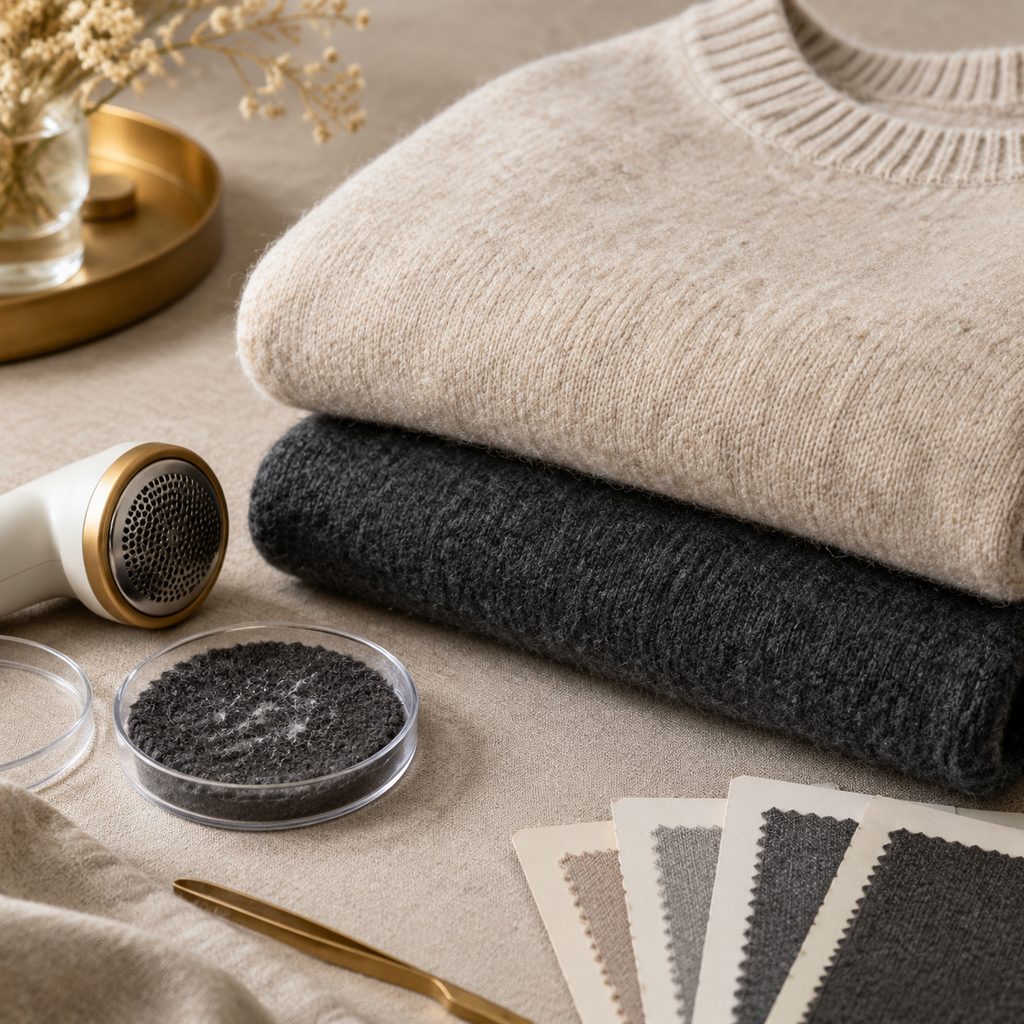
Pilling occurs when loose fibers tangle into small balls on the fabric surface. To assess resistance, labs use the Martindale abrasion tester or the ICI pilling box. In the Martindale method, fabric samples are rubbed against a standard abradant under controlled pressure for a set number of cycles (e.g., 2,000 or 5,000). The ICI method tumbles samples in a cork-lined box. After testing, samples are visually rated against standards like ASTM D4970 or ISO 12945-2, on a scale of 1 (severe pilling) to 5 (no pilling). Most retailers require a minimum rating of 3-4 for knitwear. Factors affecting pilling include fiber length, yarn twist, knit density, and finishing treatments. At YL Knit, we select long-staple fibers and optimize yarn twist to minimize pilling, and we routinely test every yarn lot to predict performance.
Colorfastness: Crocking, Washing, and Light
Colorfastness ensures that dyes stay put during wear and care. Three tests are standard:
- Crocking (rubbing) fastness: Evaluates color transfer to other fabrics via dry and wet rubbing, per AATCC 8 or ISO 105-X12. Ratings range from 1 to 5, with 4+ typically required.
- Washing fastness: Assesses color change and staining after laundering, per AATCC 61 or ISO 105-C06. Buyers often demand a rating of 4 or higher.
- Light fastness: Measures fading under exposure to light, per AATCC 16 or ISO 105-B02. For outerwear, a rating of 4+ is common.
Poor colorfastness can cause embarrassing dye transfer or fading, especially in bold colors. YL Knit uses premium dyes and rigorous rinse processes to achieve high fastness ratings, and we test every dye lot before bulk production.
How YL Knit Ensures Durability
Our in-house lab conducts pilling and colorfastness tests at multiple stages: yarn selection, lab dip approval, and finished garment inspection. We follow AATCC and ISO methods, and we can provide test reports for buyer verification. For clients with specific requirements, we collaborate with third-party labs like SGS or Intertek. This proactive approach reduces the risk of quality claims and returns. Additionally, our vertical integration—from yarn spinning to finishing—allows tight control over factors that influence durability. For example, we adjust knitting parameters to create denser fabrics that resist pilling, and we use softeners that don’t compromise colorfastness.
Key Takeaways for Buyers
When specifying knitwear, include pilling and colorfastness requirements in your tech pack. Ask suppliers for test reports and clarify the test methods and minimum ratings. Be aware that performance varies by fiber type; for instance, cashmere is more prone to pilling than cotton, so expectations should be adjusted. YL Knit’s testing protocols help buyers navigate these nuances. By prioritizing durability, brands can enhance customer satisfaction and reduce costly returns.
Frequently Asked Questions
What is pilling resistance in knitwear?
Pilling resistance measures a fabric's ability to resist forming small fiber balls on its surface during wear. It is rated on a scale of 1 to 5 using tests like Martindale or ICI pilling box.
How is colorfastness tested for sweaters?
Colorfastness is tested through crocking (rubbing), washing, and light exposure using standards such as AATCC 8, AATCC 61, and AATCC 16, with ratings from 1 to 5.
What pilling rating do retailers require?
Most retailers require a minimum pilling rating of 3-4 on a 5-point scale to ensure acceptable durability and appearance after repeated wear.
Does YL Knit conduct in-house durability tests?
Yes, YL Knit operates an in-house lab that performs pilling and colorfastness tests at yarn, lab dip, and finished garment stages using AATCC and ISO methods.
Can buyers request third-party test reports?
Absolutely. YL Knit can provide in-house test reports and also collaborates with third-party labs like SGS or Intertek for independent verification of durability performance.