Pre-Shipment Knitwear Inspection: How YL Knit Cuts Defect Rates for Global Buyers
YL Knit's pre-shipment inspection process uses AQL standards, multiple checkpoints, and a dedicated QC team to reduce defect rates and ensure on-time delivery for global fashion brands. Learn how this approach supports small batch sweater production and sustainable knitwear sourcing.
Why Pre-Shipment Inspection Matters in Knitwear Sourcing
For fashion brand buyers and sourcing managers, the final pre-shipment inspection is the last line of defense before goods leave the factory. At YL Knit, we treat this step as a critical quality gate, not a formality. With over 2.5 million sweaters shipped to 40+ countries, we have refined our inspection protocol to catch issues early and keep defect rates below industry benchmarks.
The YL Knit Inspection Protocol: AQL and Beyond
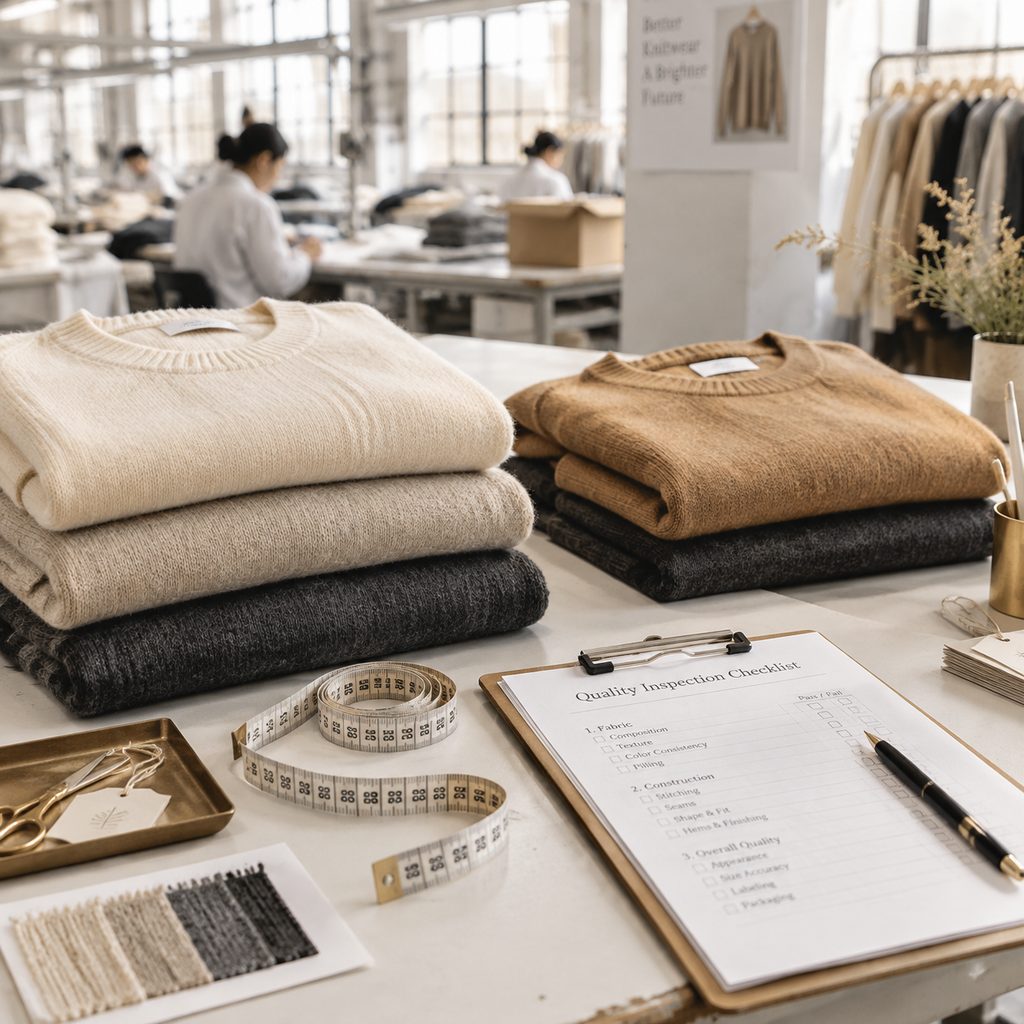
We follow the ISO 2859-1 AQL standard, typically using AQL 2.5 for major defects and AQL 4.0 for minor defects. Inspectors pull a statistically valid sample from each lot and check against a detailed checklist that covers:
- Measurements: spec compliance within tolerance
- Workmanship: seams, trims, buttons, zippers
- Color: consistency with approved lab dip
- Hand feel: softness, weight, and drape
- Labeling and packaging: correct hangtags, polybags, and cartons
Any lot that fails is either reworked or rejected. This disciplined approach is why our clients trust us for small batch sweater production, where every piece counts.
Quality Control at Every Stage
Pre-shipment inspection is just one part of our quality system. We embed QC at multiple points:
- Incoming yarn inspection: check fiber content, color, and count
- In-line inspection: monitor knitting, linking, and trimming
- Post-production: final audit before packing
Our 600-strong team includes a dedicated QC unit that reports directly to management, ensuring independence and authority to halt production if standards slip.
Reducing Defect Rates Through Training and Technology
We invest in continuous training for inspectors and knitters, and we use digital tools to log defects and analyze trends. This data helps us address root causes—whether it’s a machine calibration issue or a yarn inconsistency—before they become recurring problems. As a result, our defect rate has consistently remained under 1.5%, well below the industry average.
Supporting Sustainability and Compliance
Our inspection process also verifies compliance with OEKO-TEX, BSCI, and GRS requirements. We check that all materials meet the necessary certifications and that social compliance standards are upheld. For buyers sourcing sustainable knitwear, this means peace of mind that your order not only looks good but also aligns with your brand’s ethical commitments.
How This Benefits Your Supply Chain
By catching defects before shipment, we help you avoid costly returns, chargebacks, and delays. Our inspection reports are shared with clients, providing full transparency. With 8 factories and MOQ from 100 pcs, we offer the flexibility of small batches without compromising on quality—a combination that global brands increasingly demand.
Conclusion
Pre-shipment inspection is a vital part of knitwear sourcing, and YL Knit’s rigorous approach ensures your orders meet specifications every time. Whether you’re launching a new collection or replenishing bestsellers, our QC process protects your brand’s reputation and bottom line.
Frequently Asked Questions
What AQL level does YL Knit use?
YL Knit follows ISO 2859-1 with AQL 2.5 for major defects and 4.0 for minor defects, ensuring a statistically valid sample is inspected.
How does YL Knit keep defect rates low?
Through continuous training, digital defect logging, and root cause analysis, YL Knit maintains a defect rate under 1.5%, below industry average.
What certifications are checked during inspection?
Inspectors verify compliance with OEKO-TEX, BSCI, and GRS, ensuring materials and processes meet sustainability and social standards.
Can YL Knit handle small batch orders?
Yes, YL Knit offers MOQ from 100 pcs, making small batch sweater production feasible without sacrificing quality control.
How does inspection benefit buyers?
It prevents costly returns, chargebacks, and delays by catching defects before shipment, protecting brand reputation and bottom line.