Reshoring vs. Offshoring Sweater Production: 2026 Buyer Guide
Rising labor costs and tariffs push buyers to weigh nearshoring against Asian production. This guide compares cost, lead time, quality, and flexibility to help sweater brands make informed sourcing decisions for 2026.
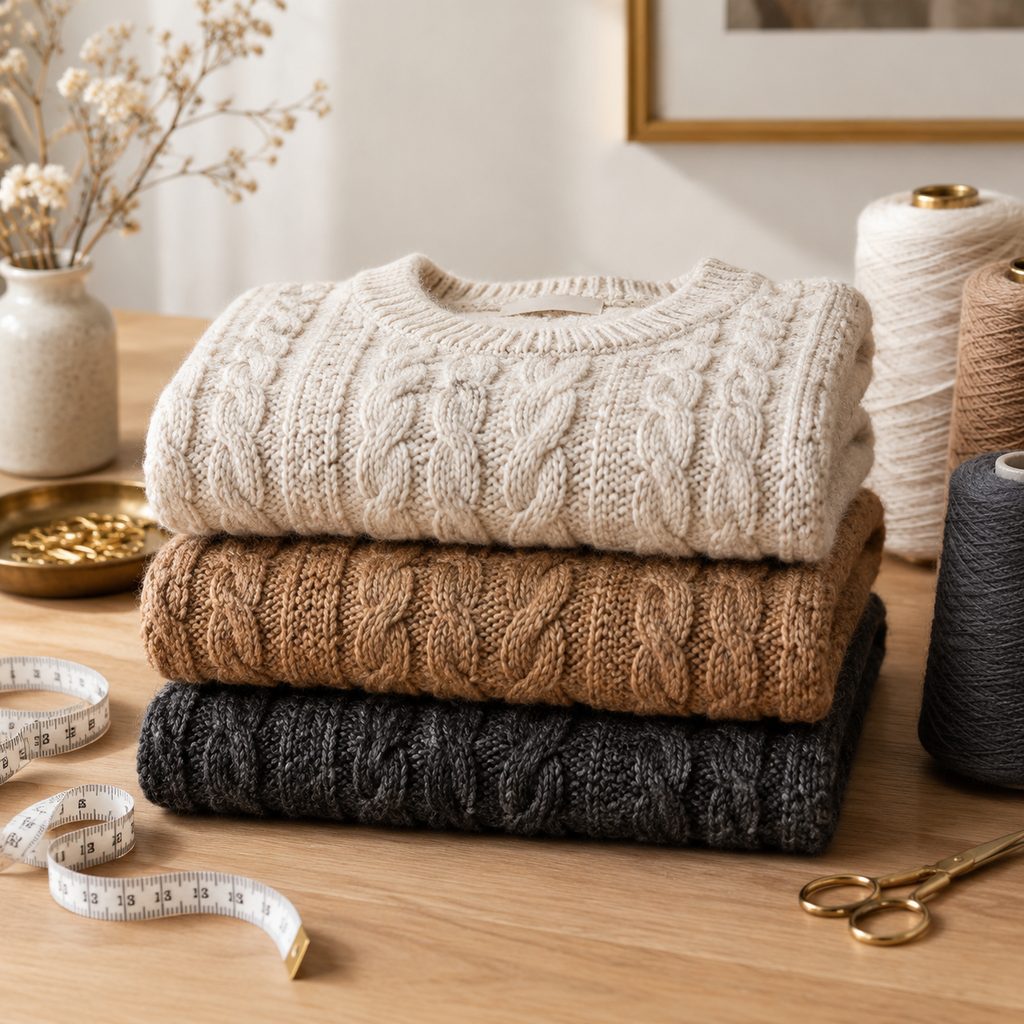
Reshoring vs. Offshoring Sweater Production: What Buyers Must Weigh in 2026
As a sourcing manager, the decision to produce sweaters domestically or overseas has never been more complex. With wage inflation, geopolitical tensions, and sustainability mandates reshaping supply chains, evaluating sweater production reshoring vs offshoring requires a clear framework. This guide breaks down the key factors—cost, lead time, quality, and flexibility—so you can choose the right model for your brand.
Cost Structures: Beyond Labor Rates
Offshoring to Asia has long been favored for lower labor costs, but total landed cost tells a fuller story. Domestic production eliminates import duties, freight, and long inventory holding periods, which can offset higher unit prices. However, for labor-intensive techniques like hand-knitting or intricate cables, Asian factories still hold a 20–40% cost advantage. When calculating total landed cost for sweater sourcing, include:
- FOB price vs. domestic ex-works price
- Duties and tariffs (e.g., Section 301)
- Ocean freight and insurance
- Inventory carrying costs (often 20–30% annually)
- Markdown risk from longer lead times
Lead Time and Responsiveness
Domestic production can slash lead times from 90–120 days to 30–45 days, enabling faster replenishment and trend response. But capacity constraints and higher minimums may limit flexibility. In contrast, Asian factories like YL Knit have optimized sampling and production workflows to deliver 60–75 day lead times, with MOQs from 100 pieces. The key is aligning your forecast accuracy with the right model: nearshoring suits fast-fashion drops; offshoring suits core basics with stable demand.
Quality and Craftsmanship
Both models can achieve premium quality, but specialization matters. Italy and Portugal excel in luxury cashmere and fine-gauge knits, while China leads in technical blends and large-scale consistency. YL Knit operates 8 factories with OEKO-TEX and GRS certifications, ensuring rigorous quality control. When assessing knitwear quality control for reshoring, verify that domestic partners have similar testing protocols and gauge capabilities.
Flexibility and Minimums
Offshoring typically requires higher MOQs (often 500–1,000 pieces per style), while domestic factories may accept 100–300. However, YL Knit's small-batch production model breaks this trade-off, offering MOQ 100 with efficient changeovers. This flexibility supports test-and-scale strategies, reducing inventory risk.
Sustainability and Compliance
Nearshoring shortens transport emissions, but Asian factories are closing the gap with GRS-certified recycled yarns and solar-powered facilities. Buyers should audit both options for water use, chemical management, and traceability. YL Knit's BSCI and OEKO-TEX certifications provide assurance for European and North American brands.
Making the Decision
There is no one-size-fits-all answer. Map your product mix: if you need rapid replenishment of trend items, consider a dual-sourcing strategy with domestic and Asian partners. For core programs, offshoring remains compelling. Ultimately, the right choice balances cost, speed, and risk tolerance. Partner with factories that offer transparency and flexibility—like YL Knit—to future-proof your supply chain.
Frequently Asked Questions
What is total landed cost in sweater sourcing?
Total landed cost includes FOB price, duties, freight, insurance, and inventory carrying costs. It helps compare domestic and offshore production accurately.
How does reshoring affect lead times?
Reshoring can cut lead times to 30-45 days, enabling faster replenishment and trend response, versus 60-120 days for offshore production.
What MOQs do offshore factories require?
Offshore factories often require 500-1,000 pieces per style, but some like YL Knit offer MOQ 100 for small-batch flexibility.
Can Asian factories meet sustainability standards?
Yes, many Asian factories hold GRS, OEKO-TEX, and BSCI certifications, and use recycled yarns and renewable energy to reduce environmental impact.
When should buyers choose reshoring?
Choose reshoring for fast-fashion drops, trend items, or when inventory carrying costs and markdown risks outweigh higher unit prices.