China Knitwear Labor Costs 2026: What Fashion Buyers Need to Know
Rising labor costs in China's knitwear industry are reshaping sourcing strategies for 2026. This article examines the drivers, regional variations, and how YL Knit's automation and efficiency measures help brands maintain competitive pricing without compromising quality.
Why Labor Costs Are Rising in China's Knitwear Sector
For fashion brand buyers and sourcing managers, understanding China knitwear labor costs is essential for accurate budgeting and supplier negotiations in 2026. Since 2020, minimum wages in key manufacturing provinces have increased by 8-12% annually, driven by demographic shifts, government policies, and post-pandemic economic recovery. In Dongguan, where YL Knit operates eight factories, the average monthly wage for skilled knitting machine operators now ranges from RMB 6,500 to 8,500, up from RMB 4,800 in 2020. This trend is not unique to China; similar increases are seen in Vietnam, Bangladesh, and Turkey, but China's mature supply chain and productivity gains partially offset the impact.
Regional Variations and Their Impact on Sourcing
Labor costs vary significantly across China's knitwear clusters. Coastal provinces like Guangdong and Zhejiang have higher wages but better infrastructure and skilled labor. Inland provinces such as Henan and Sichuan offer lower wages but may lack specialized knitting expertise. For buyers, this means a trade-off between cost and quality. YL Knit's Dongguan base leverages proximity to yarn suppliers and ports, reducing lead times, while its scale allows investment in automation that reduces labor dependency.
Automation and Efficiency: YL Knit's Response
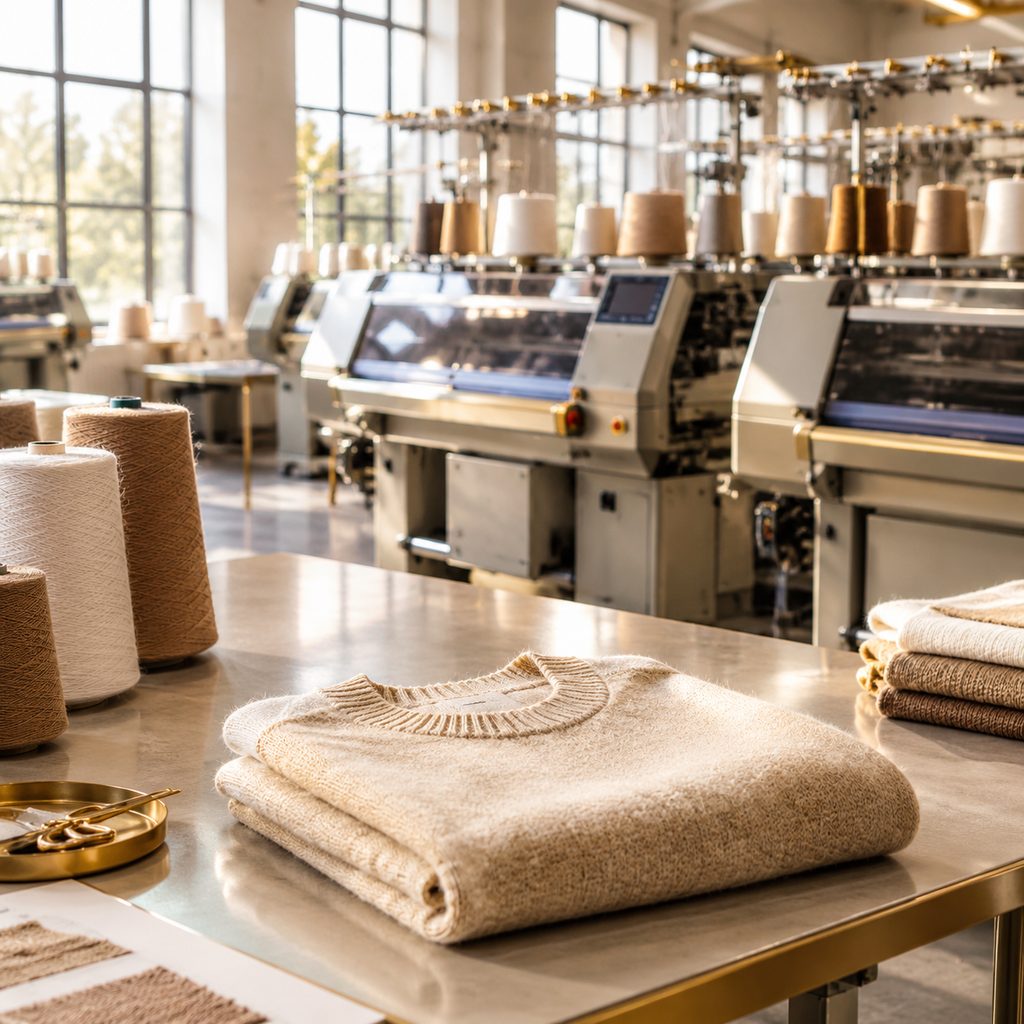
To mitigate rising labor costs, YL Knit has invested in automated knitting machines, computerized flatbeds, and digital sampling. These technologies increase output per worker by 30-40% and reduce defect rates. Additionally, our 600-strong workforce is cross-trained, allowing flexible allocation across production lines. For small batch sweater production, automation enables MOQs as low as 100 pieces without prohibitive setup costs, a key advantage for emerging brands. By optimizing workflows, we keep price increases below the industry average while maintaining OEKO-TEX, BSCI, and GRS certifications.
What This Means for Fashion Brand Buyers
Buyers should anticipate continued wage inflation in 2026, with overall knitwear production costs rising 3-5% year-over-year. To manage this, consider:
- Locking in pricing with long-term contracts that account for gradual increases.
- Partnering with factories that invest in automation to stabilize costs.
- Exploring blended yarns or design optimizations to reduce material waste.
- Planning orders earlier to avoid peak-season labor shortages.
At YL Knit, we provide transparent cost breakdowns and work with buyers to identify savings without sacrificing quality. Our Dongguan facilities, 2.5M+ sweater annual capacity, and flexible MOQs make us a resilient partner in a changing landscape.
Looking Ahead: 2026 and Beyond
Labor cost pressures will continue, but China's knitwear industry remains competitive through innovation and scale. YL Knit is committed to sustainable manufacturing, fair wages, and operational excellence, ensuring that buyers receive premium sweaters at fair prices. For sourcing managers, the key is to select partners who balance cost, compliance, and capability—factors that YL Knit delivers across 40+ countries.
Frequently Asked Questions
How much have knitwear labor costs risen in China?
Minimum wages in manufacturing provinces have increased 8-12% annually since 2020, with skilled operators in Dongguan earning RMB 6,500-8,500 monthly in 2026.
Do labor costs vary across China's knitwear regions?
Yes, coastal provinces like Guangdong and Zhejiang have higher wages but better infrastructure, while inland provinces offer lower costs but less specialized expertise.
How does automation reduce sweater production costs?
Automated knitting machines and computerized flatbeds increase output per worker by 30-40% and lower defect rates, enabling competitive pricing and small batch MOQs.
What can buyers do to manage rising knitwear costs?
Lock in long-term pricing, choose factories with automation, optimize yarn blends, and plan orders early to avoid peak-season labor shortages.
Is YL Knit still competitive despite rising labor costs?
Yes, YL Knit's Dongguan scale, automation investments, and flexible MOQs from 100 pieces keep costs stable while maintaining OEKO-TEX, BSCI, and GRS certifications.